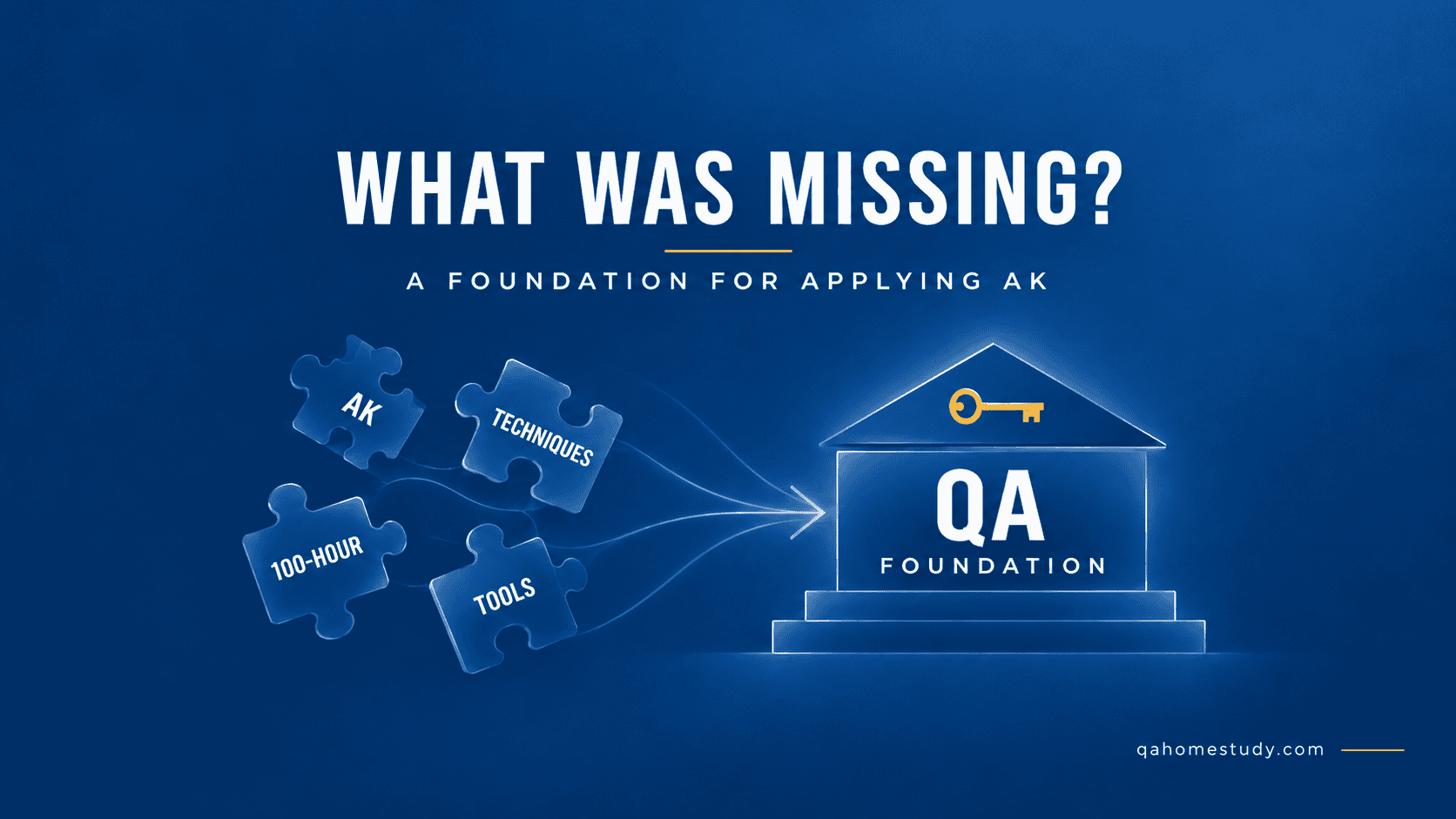
Dr. Dylan B. Miller had studied Applied Kinesiology extensively. He took the AK 100-Hour Course multiple times with four different teachers. Yet, after all that training, he still found himself trying to answer a basic clinical question: How do I put all of this information together and use it most effectively?
In 2022, Dr. Miller, a chiropractic physician then serving on the Executive Board of the International College of Applied Kinesiology, addressed this question in a six-page paper entitled “Keys To The AK Castle: Building A Foundation.” The paper was published in the ICAK-USA Proceedings and presented at that year’s Annual Meeting.
His paper recounts his own AK educational journey and the difficulty he experienced trying to find a consistent foundation for effectively applying what he was learning. That journey eventually led him to Quintessential Applications (QA).
What he wrote after completing the QA Course is the reason we are sharing his paper here:
“After completing the 16-session course, suddenly all techniques made more sense, and knowledge had a home to grow in. AK was no longer a barrage of fascinating, elusive, individual pieces, but a well understood, open-ended system to use on patients with reason and reproducibility.”
Below you will find a short summary of Dr. Miller’s paper written by QA Home Study.
The paper is linked below as a PDF, unedited, and published with his permission and the permission of the ICAK-USA. Read the full paper (PDF)
*It’s important to note that Dr. Miller has no business relationship with QA Home Study.
Why is AK struggling to grow?
Dr. Miller’s paper opens with this question: “Why, after 60 years, is the International College of Applied Kinesiology still struggling to gain physicians?”
His answer comes from what he experienced while a student in chiropractic college.
As a student he saw that many students were interested in AK, asked questions about it, wanted to be treated with it, but never committed to learning it. The reaction he heard over and over again was that AK was “neat information, but how do you use it?”
Those same students went on to study techniques that were simpler to apply. He places the responsibility for this disconnect on the institution (i.e., ICAK) rather than the students, and points out: “No student should ever have to find their own path when trying to acquire the basics of AK.”
Every teacher he studied with taught a different version of AK principles and practice, and although students who finished the basic courses were exposed to a great deal of information, they were not provided with a unifying context for applying it in practice.
His educational journey before QA
The middle of the paper recounts his own AK training.
Dr. Miller took the Basic 100-Hours of Applied Kinesiology “five or six times with four different teachers.” Each class, he writes, “had its own take on AK.”
He then went back to Dr. Goodheart recorded seminars on VHS, which built his confidence in AK but still did not tell him how to put all the knowledge he had gained into practice.
Dr. David Leaf’s seminar series did more for him as it helped to organize the procedures into a more usable form, and he “came away with confidence to treat a patient with purpose, direction, and applied kinesiology.”
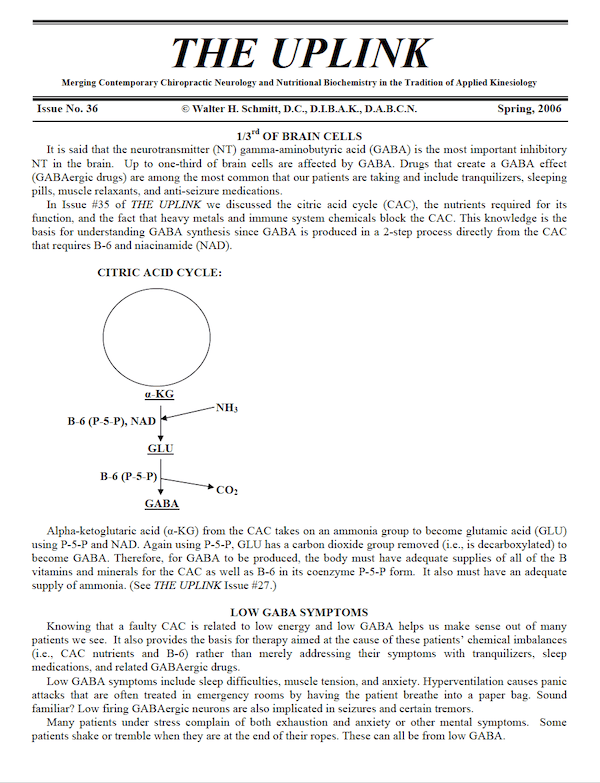
Although he had known about the QA Course for some time, he waited to begin because he assumed a course developed by a Diplomate in chiropractic neurology would be too advanced until he had more experience in AK.
On that point he is blunt: “nothing could have been further from the truth.”
What changed?
He first describes his disappointment: on starting QA he found that much of the AK information he had worked so hard to understand “had been superseded by updated science.” Then, after completing the 16 sessions he understood…
“QA is more than a protocol, it was the foundation I had been looking for all along. After completing the 16-session course, suddenly all techniques made more sense, and knowledge had a home to grow in. AK was no longer a barrage of fascinating, elusive, individual pieces, but a well understood, open-ended system to use on patients with reason and reproducibility.”
And on the course itself:
“This class taught me a timeless, scientifically sound, up-to-date, basic neurological foundation from which to build all other AK skills upon.”
His word for what he had been missing is “foundation,” and it appears more than twenty times in six pages of his paper.
What he found in QA was a context for organizing everything he already knew, giving him a physiologically sound map for navigating the forest of a patient’s symptoms.
What he proposes
The paper is written to the ICAK, and its proposal is institutional. He calls the current 100-hour certification courses “not obsolete, but rather outdated.”
He proposes that the ICAK adopt the QA Course as the standard for basic Professional Applied Kinesiology training, so that every student starts from the same point and every patient can expect the same foundational care from a PAK-certified physician.
He is equally clear that this or any online course is not the whole answer. In his words, “the roughly 160-hour course will not suffice all on its own.”
His proposal adds lab time for manual muscle testing and technique workshops, and puts the total for a basic certification at 260 hours or more.
He acknowledges that many respected teachers within the ICAK have protocols of their own, and names fourteen of them. His answer to the obvious objection is one sentence: “Why reinvent the wheel and put another class together to do what has already been done? The QA Protocol is complete and ready to put into place today.”
Whether the ICAK adopts his proposal or not is yet to be determined.
For an individual practitioner, the most telling part of Miller’s paper is simple: he had been looking for a sound foundation for applying AK, and he found it in Quintessential Applications.
Where this leaves your own training
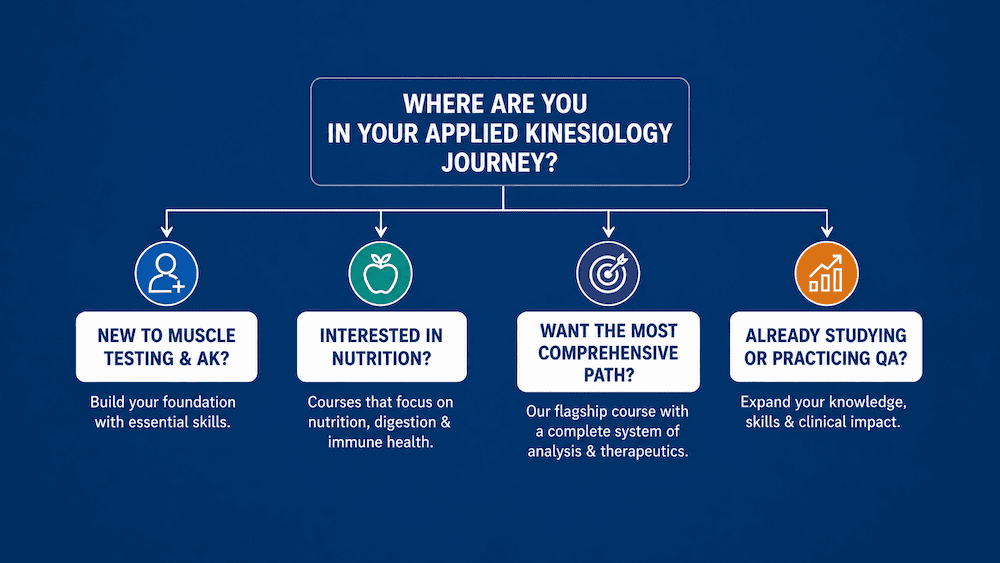
If you have already taken any of the AK 100-Hour Courses, as Dr. Miller had several times, the QA Course is what he describes as the “Keys to the AK Castle”.
To get a sense of how the QA Course is taught, you can watch QA Session 1 free for one week. This session covers four pain relief techniques and gives you an opportunity to experience the course before deciding whether to continue.
If you feel you are not yet ready for that deeper plunge, consider Dr. Schmitt’s updated, pre-recorded AK 100-Hour Course.
This is the path Dr. Miller took: the AK 100-Hour Course first and then QA.
It is also the path Dr. Schmitt himself followed in developing the QA Protocol during 30 years of teaching, practicing and revising his approach.
Important Note: The full purchase price of Schmitt’s AK 100 Hour Course will be credited toward the purchase of the QA Course should you decide to continue.
The paper
Dr. Miller’s paper is linked below, and is shared here with the author’s permission and the permission of ICAK-USA (copyright holder).
Miller DB. Keys To the AK Castle: Building A Foundation. Proceedings of the ICAK-USA, 2022:39-44. Copyright 2022, Dylan B. Miller, D.C. All rights reserved. Permission granted by ©ICAK-USA.
Keys To the AK Castle: Building A Foundation (PDF)
FAQ
Who is Dr. Dylan Miller?
Dr. Miller is a chiropractic physician who, by his own account, studied Applied Kinesiology with four different teachers (all Diplomates of Applied Kinesiology), took the 100-Hour Professional Applied Kinesiology Course multiple times, and then began studying online with Dr. Wally Schmitt and completed the 16-session, 192-hour QA Course.
His practice website states that he practices in Missouri and Iowa, has served on the International Executive Board of ICAK, chaired ICAK-USA’s review of research manuscripts for its annual Proceedings, and received the 2022 Wally Schmitt Award and two Alan Beardall Memorial Awards from the ICAK-USA.
He has no business relationship with QA Home Study.
Is this paper an advertisement?
No. Dr. Miller’s paper was published in the 2022 ICAK-USA Proceedings, and presented at that year’s Homecoming Conference, as an argument about how basic AK training should be structured, and includes a paragraph that acknowledges that an online course alone is not enough.
QA Home Study is publishing this paper with permission because of its favorable account of the QA Course’s impact on Dr. Miller’s understanding and implementation of AK principles and practice.
What does Dr. Miller say about the 100-hour course?
That it is “not obsolete, but rather outdated.” That its content varied with each of the four teachers with whom he studied. And, that it left him with information he could not effectively put into practice.
Does QA replace the 100-Hour Course?
In Miller’s paper he states: “The basic PAK certification coursework needs to be updated and unified.”
An initial effort at updating “the basic PAK certification coursework” came early in the 21st Century with Dr. Schmitt’s revised AK 100 Hour Course – now better known as the precursor to the QA Course.
The QA Course then expanded on this initial update by emphasizing the thought process that so significantly impacted Miller’s understanding of the application of AK principles and practice.
Miller states, “After completing the 16-session course…. AK was no longer a barrage of fascinating, elusive, individual pieces, but a well understood, open-ended system to use on patients with reason and reproducibility.”
Dr. Schmitt’s AK 100 Hour Course (price paid credits toward purchase of QA Course)
QA Course