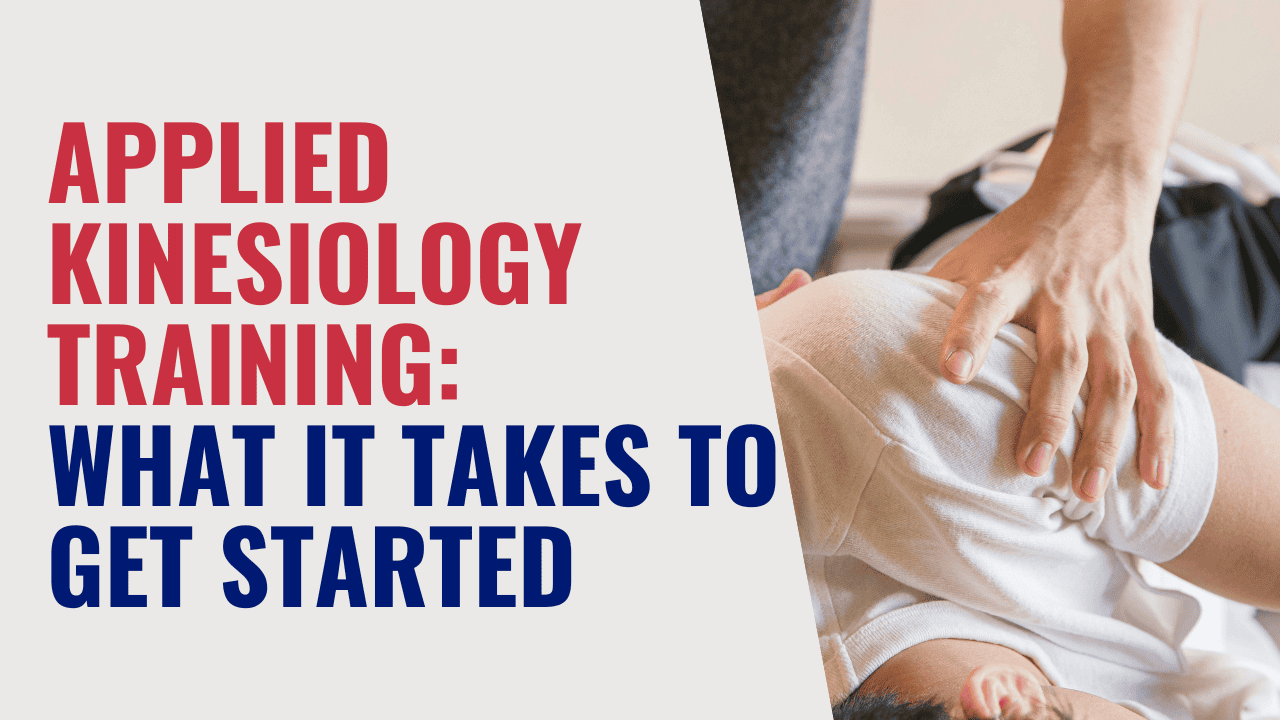
Most chiropractors and licensed practitioners first hear about applied kinesiology (AK) at conferences, in study groups, or from colleagues who describe a case that resolved remarkably well. The next question is almost always the same: what does it take to learn AK?
This guide explains what applied kinesiology training covers, who it’s for, how much time it requires, and the best way to begin for those ready to start.
We’ll focus on Dr. Wally Schmitt’s AK 100-hour Course. This curriculum has been training chiropractors and licensed practitioners for decades.

What is applied kinesiology training?
Applied kinesiology training is the study of a clinical assessment system. The International College of Applied Kinesiology (ICAK) defines it as “a system that evaluates structural, chemical, and mental aspects of health using manual muscle testing and other standard methods of diagnosis.” Training differs from certification, but can lead to it. The ICAK certifies a practitioner’s skills through a formal credentialing process.
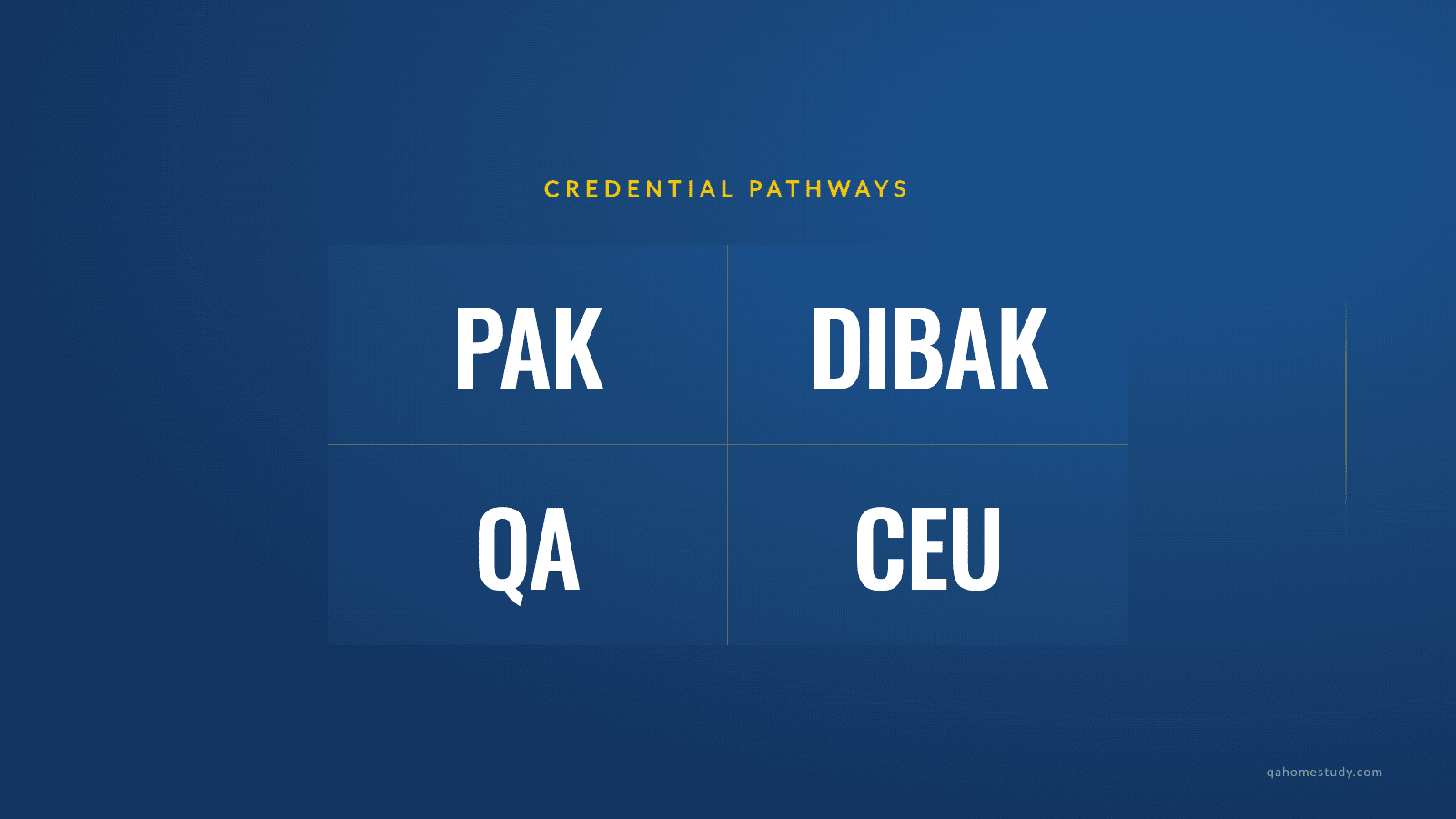
NOTE: The Professional Applied Kinesiology (PAK) and Diplomate of Applied Kinesiology (DIBAK) pathways and how they map to training hours are covered in the AK certification guide. For a broader overview of what applied kinesiology is and how it works clinically, see the full practitioner’s guide.
Dr. George Goodheart, a chiropractic physician in Detroit, Michigan, developed this system of analysis and therapies. It began with a single patient encounter in 1964, when he discovered that a weak muscle could yield information useful in diagnosis and treatment, and it grew through decades of clinical research. The full origin story is available here on our blog.
Dr. Walter “Wally” Schmitt was a neighbor, family friend, and associate in Goodheart’s office. He spent more than 30 years developing a clinical protocol that uses AK principles, techniques, and procedures to guide what to do first, next, and last to achieve the most effective outcome. Background on Dr. Schmitt is available at https://qahomestudy.com/dr-wally-schmitt/.
Goodheart developed two foundational models that are included in every AK introductory course:
- The Triad of Health. Structural, chemical, and mental aspects of health are modeled as an equilateral triangle. Each side influences the others. Most clinicians overemphasize one side: chiropractors and orthopedists lean toward structural approaches, allopaths and nutritionists toward chemistry, and psychiatrists and psychologists toward the mental side. AK trains the clinician to evaluate all three. More on the Triad in this post.
- The Five Factors of the Intervertebral Foramen (IVF). Goodheart grouped the mechanisms that affect muscle balance and visceral function within the IVF. This model made them easier to remember: nerve, neurolymphatic (Chapman’s) reflexes, neurovascular (Bennett’s) reflexes, cerebrospinal fluid flow, and the acupuncture meridian connector. Nutrition was added in 1968 and represented support for the nerve in the original model. Dr. Schmitt discussed this framework in his AK 100-Hour Course when covering the historical development of applied kinesiology.
Manual muscle testing is the assessment tool that Goodheart pioneered and that Schmitt taught. “You can’t make a diagnosis based on muscle testing alone,” Dr. Schmitt tells the 100-hour students, “but it’s a great help in guiding you where to look.” Once the muscle testing response identifies the area, the practitioner uses the most relevant procedures to resolve the issue.
He described AK as “a method of functional neurological evaluation.” Changes in neuromuscular activity arise from mechanical, chemical, and emotional inputs. These changes provide important diagnostic insights in AK.
Who applied kinesiology training is for
The ICAK states that applied kinesiology practice is “limited to health care professionals licensed to diagnose.” Its credentialing process is the gateway to two certifications: PAK (Professional Applied Kinesiology) and DIBAK (Diplomate in AK).
In the United States, chiropractors make up the largest group of AK-trained practitioners. Naturopaths, osteopaths, MDs, dentists, and acupuncturists also pursue training, especially internationally. In Germany alone, there are roughly 4,000 ICAK members, most of whom are medical doctors. In Italy, many ICAK members are dentists.
Practitioners without a license to diagnose can study and build manual muscle testing skills, but cannot pursue ICAK certification.
What applied kinesiology training takes
Time commitment
The standard for a foundational applied kinesiology course is 100 hours of instruction. The ICAK requires those 100 hours from an ICAK-approved teaching Diplomate before a practitioner can take the PAK examination. To achieve Diplomate status (DIBAK), a practitioner needs 300 hours of instruction, three years of practice, and two published research papers.
An AK 100-hour Course typically consists of eight sessions, each lasting twelve and a half hours. Practitioners using a self-paced online curriculum usually complete the 100 hours of study in six to twelve months.
Prerequisites
ICAK certification (PAK or DIBAK) requires one thing: a license to diagnose in your area or enrollment in a healing arts college. Without this license, a practitioner can gain skills but cannot pursue professional accreditation. This is the gateway mentioned earlier: “Who applied kinesiology training is for.”
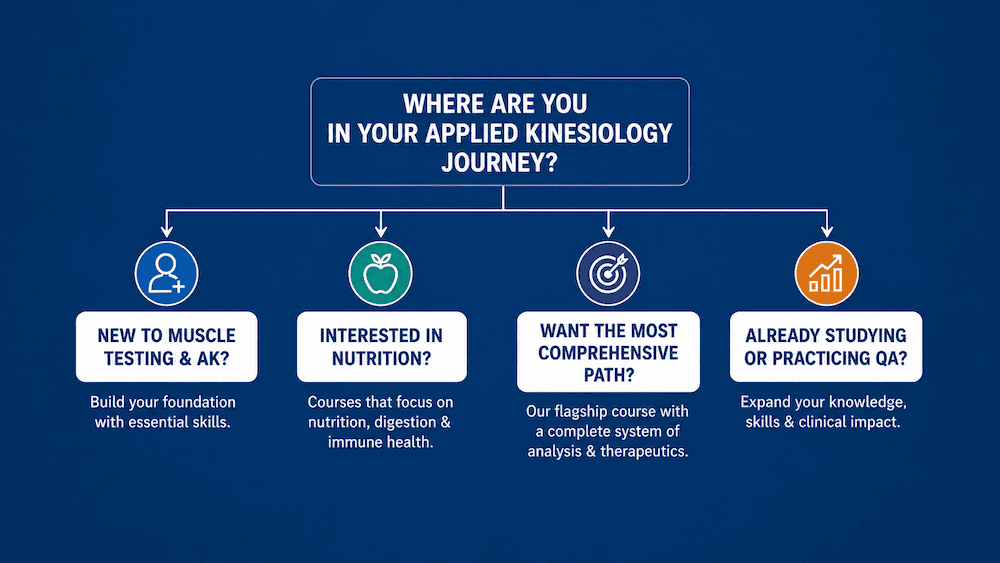
Practitioners new to manual muscle testing can develop this skill by taking a dedicated Muscle Testing Training course. They can do this before or during the AK 100-Hour Course.
Online and in-person formats
To get PAK certification, online training students must complete 30 hours of live workshops. This is in addition to the 70 hours of approved online instruction.
An online curriculum has a different rhythm from in-person training. You can adjust the lecture content to match your schedule. However, you need to practice muscle testing in a clinical setting to develop your skills.
What a well-taught course makes possible
The ICAK defines applied kinesiology as the ability to evaluate the nervous system to determine which part of the structural, chemical, and mental triad affects the patient. Then, therapy targets that imbalance. The patient’s manual muscle testing response is used as feedback during both assessment and treatment.
The foundational AK 100-Hour Course trains you to:
- Evaluate all sides of the triad of health rather than overemphasizing one over another.
- Locate which side or sides of the triad are creating the current issue and the best order to address them efficiently.
- Direct therapy to the specific imbalance, and use the body’s response to confirm or revise your approach as the patient changes.
- Diagnose the underlying physiological process, not just name the condition. As Dr. Schmitt often said, “Diagnose the process, not just the name.”
Dr. Schmitt’s AK 100-hour Course
Dr. Wally Schmitt taught the AK 100-Hour Course with Dr. Goodheart for over twenty years. Later, he revised the curriculum and filmed it for online study.
The course consists of eight sessions of twelve and a half hours each, with comprehensive notes, clinical procedures, supporting papers, and lifetime access.
- Session 1: Overview of AK principles, manual muscle testing, gait analysis, Injury Recall Technique
- Session 2: Low back and hip muscles, spinal mechanics, TMJ techniques
- Session 3: Cervical muscles, cranial-sacral assessment, neurological disorganization
- Session 4: Shoulder muscles, visceral referred pain, ileocecal valve syndromes
- Session 5: Knee muscles, adrenal stress assessment, emotional recall technique
- Session 6: Foot and ankle muscles, allergies, liver detoxification
- Session 7: Elbow muscles, gait assessment, insulin sensitivity, cholesterol metabolism
- Session 8: Wrist and hand muscles, TMJ examination, glandular dysfunction
Dr. Bill Sexton, of Reidsville, NC, described Dr. Schmitt’s AK 100-hour course as an “excellent, informative class on topics and techniques that every practice can use. Dr. Schmitt’s instruction and clinical experience are unsurpassed.”
Dr. Brian DeWire, of Paintsville, KY, called it “step-by-step and very well thought out. It has helped me rebalance my patients and has increased the results in my practice.”
Where does applied kinesiology training lead next
After completing the 100-hour Course, dedicated clinicians should enroll in the QA Course. Led by Dr. Schmitt, this course has 16 sessions and lasts 192 hours. It emphasizes clinical decision-making in a systems-oriented framework known as the QA Clinical Protocol.
The AK 100-Hour Course teaches the techniques individually. In contrast, the QA Course teaches the order to apply these techniques and the reasons behind it.
One important policy: If a practitioner upgrades to the QA Course, we will credit the full price of Dr. Schmitt’s AK 100-Hour Course toward your purchase. You keep everything you put in when you upgrade to the QA Course.
Frequently asked questions
How long does applied kinesiology training take?
Foundational training in AK is typically 100 hours. Working through that material, self-paced and online, takes most practitioners six to twelve months. ICAK certification (PAK or DIBAK) takes more time. It requires extra hours of live workshops and both written and practical exams. For Diplomate status (DIBAK), you will need several years of practice and two research papers.
Can I learn applied kinesiology online?
Yes! Many study AK online, but credentialing through the ICAK requires in-person, hands-on training. QA Home Study provides much of the approved curriculum needed for AK certification.
Do you need to be a chiropractor to learn applied kinesiology?
No. ICAK certification is open to any healthcare practitioner licensed to diagnose. This includes chiropractors, naturopaths, MDs, osteopaths, dentists, acupuncturists, and more.
How much does AK training cost?
Dr. Schmitt’s AK 100-Hour Course costs $1,499 and includes lifetime online access. If you later upgrade to the QA Course, we’ll credit the full amount you paid toward it.
Live workshops are billed separately. So are ICAK membership fees for those seeking PAK or DIBAK credentials.
Is applied kinesiology hard to learn?
Manual muscle testing is both an art and a science. The fundamentals can be learned in a weekend, but it takes practice to test muscle with clinical precision. The clinical reasoning that turns muscle testing into treatment decisions takes even longer, and it’s one of the primary reasons a 100-hour curriculum exists.
Practitioners from a variety of backgrounds usually find the learning curve manageable. The most common shift in a clinician’s approach is not technical but conceptual: learning to think and treat systemically before focusing on the local problem.
Where to start
A natural place to begin is Dr. Schmitt’s AK 100-Hour Course. With lifetime online access at only $1,499 and the full price credited toward the QA Course if you decide to continue, it’s a choice with no downside.
New clinical AK content is published monthly. Add your email below to receive the next article when it is ready.
This article draws on the AK 100-Hour Course and the QA Course, Dr. Schmitt’s 16-session clinical protocol for applied kinesiology. A free trial of QA Session 1 is available at qahomestudy.com.