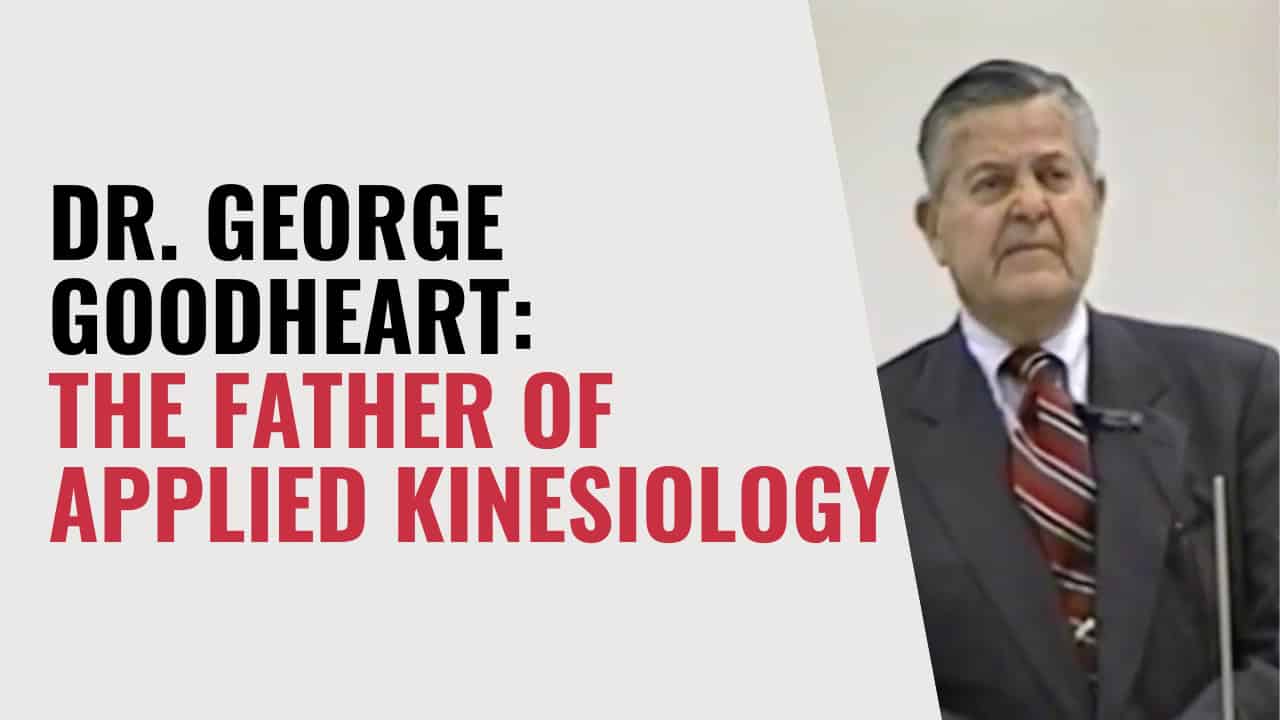
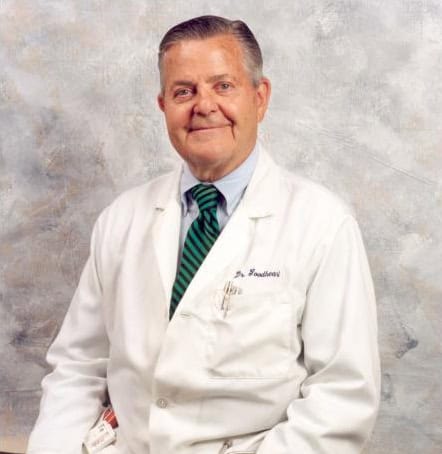
Few figures in the history of chiropractic medicine have left a legacy as distinctive as Dr. George Goodheart, Jr. He was a second-generation chiropractor, a decorated World War II veteran, and the person Time Magazine would one day call “The Man with Magic Fingers.”
Training and early practice
Goodheart was trained at the National College of Chiropractic in Chicago and, upon graduation, entered practice well-trained in chiropractic philosophy, orthopedics, spinal and extremity adjusting, and the standard diagnostics of the era.
He joined his father’s practice, a chiropractic physician who had studied under Dr. DeJarnette, founder of the Sacro-Occipital Technique, and there he observed, learned, and deepened his understanding of optimal human function.
In 1964, a colleague gave a copy of the book Muscles, Testing, and Function, by Kendall and Kendall. It was written with a focus on assessing disability in polio patients. Goodheart was intrigued, read it, and set it aside.
“A nice book…. but what good is it to be able to test a muscle, and if found weak, all that can be done is exercise it?”
The question lingered. The answer came later.
The patient who started everything
One of Dr. Goodheart’s early patients was a veteran with a hyperthyroid condition. Goodheart treated him through nutritional therapy, but the man’s health problems had damaged his work record, and he could no longer get hired for jobs he had previously qualified for. True to his character, Goodheart arranged a delivery job for him with a company in the same building as his office.
Whenever he spotted Dr. Goodheart in his office, he’d ask, loud enough for everyone to hear:
“Hey, Doc, when are you going to fix my shoulder?”
One afternoon, Goodheart had an open treatment room and invited him in.
As he began to examine his shoulder and the muscles that support its function, he palpated along the lateral rib attachments of the serratus anterior and found the attachments to be tender.
Recalling the serratus anterior test from Kendall and Kendall, he performed it and found that the muscle was failing to hold the scapula against the rib cage. This condition is known as a “winging” scapula because the bone lifts away from the ribs.
Dr. Goodheart then pressed and kneaded the tender nodules until he felt them disappear… though it caused the patient considerable pain. When Goodheart was finished, the man looked up and said.
“Gee, Doc, that feels better. Why didn’t you do that before?”
Goodheart replied: “Well, that’s what you come here for. It takes time to build up to a thing like this.”
Then he said, “Just for fun, put your hands against the wall and let me test the muscle again”.
He practically pushed the patient’s hands through the plywood wall. There was no “winging” at all!
That was 1964, the initial observation that led to the development of what we now know as Applied Kinesiology.
Goodheart called the patient back the next day under the pretense of checking his hair loss. The real question was whether the serratus would hold. He retested it, and it did. The muscle never failed again.
“That patient was Ronald Fultz. It was the beginning. I now saw why people looked like they did. I saw why they had a head tilt….why their shoulder was high. I could now find a weak muscle that posture had revealed.”
Dr. Goodheart tells the Ronald Fultz story
What the discovery changed
Before 1964, Goodheart, like most practitioners, had been trained to see muscle spasm as a primary problem. Tight muscles got treated. Bones got adjusted. It was a vicious cycle.
After Fultz, something shifted. “Prior to 1964, I saw hundreds of patients with muscle spasm. Following 1964, my colleagues and I saw so few cases of primary muscle spasm, and what we did see, we could count on our fingers.”
The model he had inherited was backwards. Tight muscles weren’t the problem. They were the compensation. The problem was muscle weakness. The mast of a sailboat stays upright when both guide wires have equal tension. Loosen one wire, the mast tilts away from the loose side, and the opposite wire looks tight. You could work on the tight wire indefinitely without solving the problem.
“Body language never lies,” he said of this newfound method of analysis. “Find the need, supply the need, observe the result.”
The question that came next: if muscle testing revealed weakness, and treating the origin and insertion of the muscle could restore strength, what else was driving disturbances in muscle function? Goodheart spent the next decade finding out.
[Note: For a broader overview of what Applied Kinesiology is and how it works clinically, see the full practitioner’s guide here.]
A decade of discovery: 1964-1974
Chapman’s reflexes
A patient arrived in Goodheart’s office with “sciatica” so severe that sitting, standing, and lying down all produced excruciating pain. Only constant walking provided relief. He’d taken everything out of his basement and circled the walls at night, half asleep.
Goodheart tested the tensor fascia lata muscle and found it weak. He palpated the iliotibial band and found it tender and nodular. This was exactly the pattern Dr. Frank Chapman, a 1930s osteopath, had identified as a reflex point for the large intestine. He worked those tender and nodular areas for some time until they seemed to resolve. The patient looked up: “Thank God, that’s the first relief I’ve ever gotten.”
He spent the next year studying Chapman’s reflexes and correlating them with his muscle testing observations.
Dr. Goodheart recounts his first use of Chapman’s reflexes.
Bennett’s neurovascular reflexes
Terence Bennett, a chiropractor in the early 1930s, had hypothesized what he believed were embryological pulse centers, located mostly on the skull, whose contact with light stretch seemed to improve blood supply to specific organs. Goodheart found that the light contact over the sites identified by Bennett produced a palpable pulse (roughly 72 beats per minute). Goodheart had observed a muscle organ relationship, and when these pulse centers were stimulated, the organ-associated weak muscle, when present, resolved.
Dr. Goodheart on his first neurovascular activation (Saratoga asthma case).
Cerebrospinal fluid flow and cranial techniques
In 1968, following the work of osteopaths Nephi Cottam and William Garner Sutherland, Goodheart began to correlate specific muscle weakness patterns with the possibility of disturbed cerebrospinal fluid flow. The premise that the skull is an “ivory box” did not match his clinical observations. He observed fourteen distinct cranial faults, each with its own clinical presentation and specific correction, that correlated with muscle weakness patterns he had observed.
Dr. Goodheart describes his first cranial correction.
Acupuncture meridians
Goodheart also documented the relationship between acupuncture meridians and muscle imbalance. The pectoralis major clavicular division correlated with the stomach meridian; the pectoralis major sternal with the liver; the latissimus dorsi with the pancreas; the psoas with the kidney; and so on. The same pattern kept emerging across systems that had seemed unrelated. He observed that the same finding could be confirmed using any of these systems, with each one corroborating the others.
The 1972 Cervical Challenge
A young woman scheduled for surgery for recurrent spontaneous nocturnal shoulder dislocation came to Goodheart as a last resort. After ruling out muscle weakness, he asked her to demonstrate her sleeping position. With her head and arm in her sleeping position, he applied directional pressure to the atlas, and spontaneous dislocation of the shoulder occurred right there in the clinic. He corrected the dislocation and then adjusted the atlas in the same direction he had pushed. Incredibly, the dislocation did not occur spontaneously and never did recur.
The mechanism of note was hypothesized to be a rebound effect. That is, if you challenge a subluxated vertebra with directional pressure and release it, the spinal musculature fires back, producing nervous system irritation observed as spontaneous weakness of a predetermined, normally functioning muscle. An unsubluxated vertebra, challenged the same way, produces no change in the manual muscle testing response. That difference gave the clinician a precise pre-adjustment analysis and a way to confirm that correction had actually taken place.
Dr. Goodheart on the shoulder-dislocation case that introduced vertebral challenge.
Therapy localization: the 1974 breakthrough
In 1974, an Australian tennis player presented in Goodheart’s office with carpal tunnel syndrome. Goodheart was explaining a procedure when she placed her hand on the area he was discussing while he tested a related muscle. It tested strong. He then asked her to remove her hand, and the muscle failed the manual muscle test. He was dumbfounded and couldn’t immediately explain why this might happen
“What the hell is that?” was a phrase often used by Goodheart when observing something he had not previously seen.
Some months later, he was sitting in his study, thinking about the observation he had made. He described what came to him in these words: “My mind said, ‘You’re asking the wrong person.’ And I said, ‘Well, who do you ask besides yourself?’ And my mind said, ‘You ask the patient to ask the patient.’”
That observation of a patient touching an area of the body that caused a change in muscle testing response came to be known as therapy localization and is used as a diagnostic tool by AK doctors around the globe.
Touch a point on the spine, and the muscle-testing response changes. That spinal level needs attention. Touch a reflex point, and a weak muscle now tests strong. That reflex is active and needs treatment. Goodheart made it clear that while therapy localization doesn’t tell you what the problem is, it does tell you where to look.
Dr. Schmitt later called it “the single greatest advance in the healing arts in the 20th century.”
Dr. Goodheart on the discovery of therapy localization.
The International College of Applied Kinesiology
In 1976, Goodheart and his colleagues had built enough of a following to establish the International College of Applied Kinesiology (ICAK). The organization gave practitioners a forum to share observations, standardized training across the field, and advanced the research program.
Today, the ICAK has chapters worldwide. The German chapter has roughly 4,000 members, nearly all medical doctors. In Italy, many are dentists. In Australia and the United States, most are chiropractors. Different professions, different countries, same framework. It turns out the clinical logic transfers regardless of what letters come after a practitioner’s name.
The Olympics
In 1980, Goodheart became the first chiropractor to serve on the United States Olympic Medical Team.
Dr. Irving Dardik, a vascular surgeon and then chairman of the U.S. Olympic Medical Committee, had been suffering from hamstring cramps severe enough to stop him from running more than two miles. He had tried medications, exercise regimens, stretching, and everything else he could find. Nothing worked.
Having heard of Goodheart’s work, Dardik invited him for an interview. “I have seen all that you have written,” he said, “but what is important is what you can do for the athletes that others might not be able to do.” He then described his hamstring problem and asked Goodheart to evaluate and treat it.
Goodheart identified what he termed was a reactive muscle relationship between the latissimus dorsi and the hamstrings on the opposite side. He treated the reactivity and flew home the next day. That was Saturday. On Monday morning, his phone rang.
Dardick recounted: “I ran 10 miles yesterday, and I ran 10 miles today. I didn’t get a cramp.”You got the job.”
He reflected on what that appointment meant: “That’s how I became the first chiropractor to serve on the US Olympic medical team — by fixing something rather than talking about it or jousting for position politically.
Res ipsa loquitur. It speaks for itself.”
Dr. Goodheart on how he got appointed to the US Olympic team.
Goodheart’s legacy
Early on, Goodheart often told his colleagues: “We have to know what we know, and know what others know, and then be able to put it all together better than anyone else.”
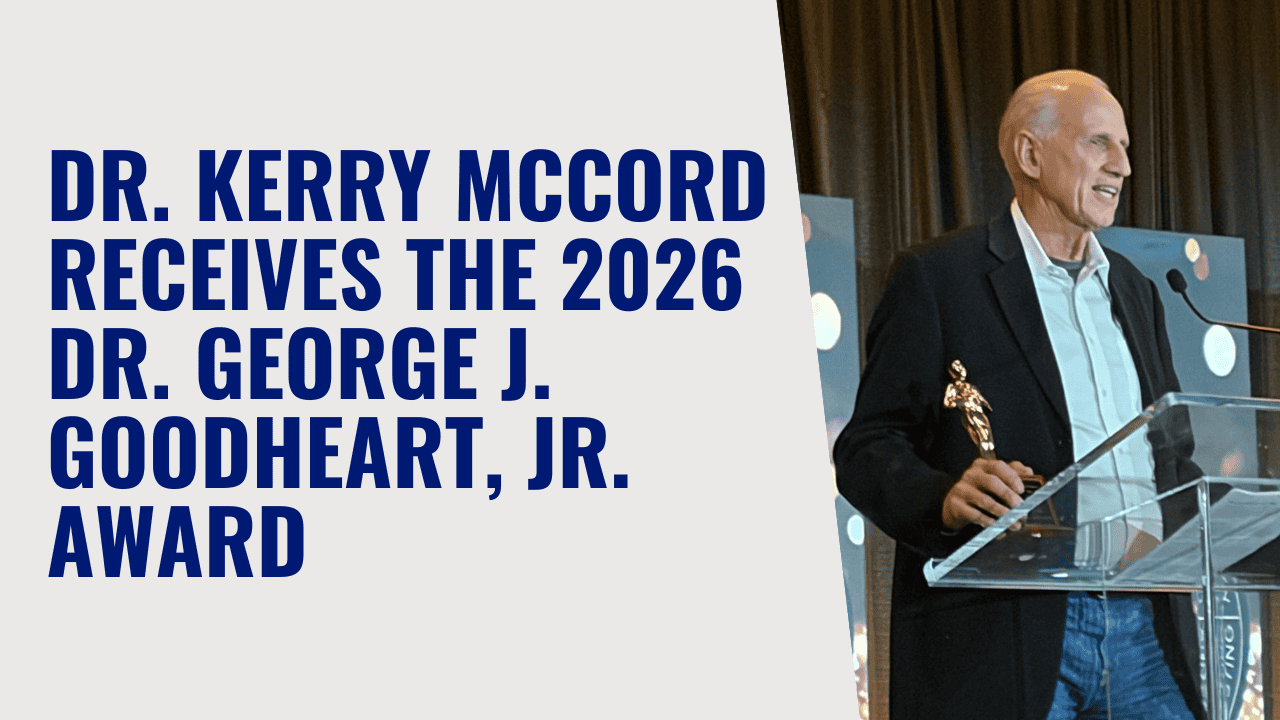
Dr. Walter Schmitt took that charge seriously. He spent three decades working alongside Goodheart and eventually answered a question Goodheart’s framework had left open: sequence mattered. The same techniques applied in a different order produced different results. Applying them in a physiologically logical order became what is now known as the Quintessential Applications (QA) Clinical Protocol, or the QA Course. The protocol is documented in the QA Book, the clinical reference manual Schmitt co-authored with Dr. Kerry McCord.
Where to learn AK today
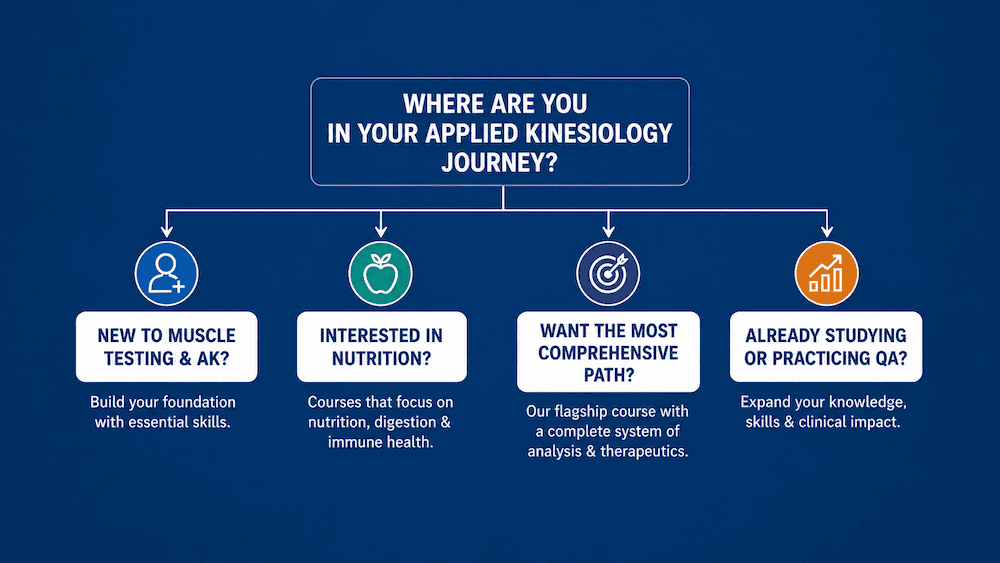
- Start with the QA Course — Access Session 1 FREE for 7 days, no credit card required
- Try the AK 100-Hour Course — A lighter introduction to AK; the full purchase price credits toward the QA Course if you upgrade later
- Explore Injury Recall Technique — A single procedure that many practitioners implement from day one
- Browse all Courses — For beginners and advanced practitioners
Frequently asked questions
Who was Dr. George Goodheart?
Dr. George Goodheart (1918-2008) was a Detroit chiropractor who founded applied kinesiology in 1964. He was the first chiropractor appointed to the United States Olympic Medical Team and, along with his like-minded colleagues, founded the International College of Applied Kinesiology (ICAK).
What did Dr. Goodheart discover?
Goodheart discovered that manual muscle testing could map the neurological pathways controlling each muscle, not merely grade overall strength. He catalogued connections between specific muscles and organ systems and,in 1974, discovered what Schmitt called “the single greatest advance in the healing arts in the 20th century” — therapy localization.
When was applied kinesiology founded?
Applied kinesiology was founded in 1964, when Goodheart successfully treated a patient using what he called, origin-insertion technique (a deep directional pressure to muscle attachments), the first treatment of its kind. He subsequently documented the method in his first Applied Kinesiology Workshop Manual published that same year.
What is the Triad of Health?
The Triad of Health is a framework Goodheart developed early in the discipline’s history. It holds that structural, chemical, and mental factors each affect the others. A problem in one dimension can manifest in another. For example, chronic inflammation from a food sensitivity can show up as back or joint pain. Practitioners use this framework to address a patient’s problems, especially the ones that keep coming back.
Where can I learn applied kinesiology based on Goodheart’s work?
The QA Course, developed by Dr. Walter Schmitt, builds directly on Goodheart’s work and focuses specifically on the sequencing of AK procedures for optimal clinical results. Review Session 1 for Free.
You can also take the fundamental AK 100 Hour Course taught by Dr. Schmitt