A comprehensive look at what Applied Kinesiology actually is, how it works in clinical practice, and why it matters for modern healthcare, from the educators who trained under its pioneers.
Search “applied kinesiology,” and you’ll land in one of two camps. The first dismisses it as pseudoscience, lumped in with parlor tricks and arm-pushing demonstrations. The second is made up of thousands of chiropractors, osteopaths, and integrative practitioners who use applied kinesiology daily and get results their patients call remarkable.
Both camps are talking past each other. This guide is for those in between.
What is applied kinesiology?
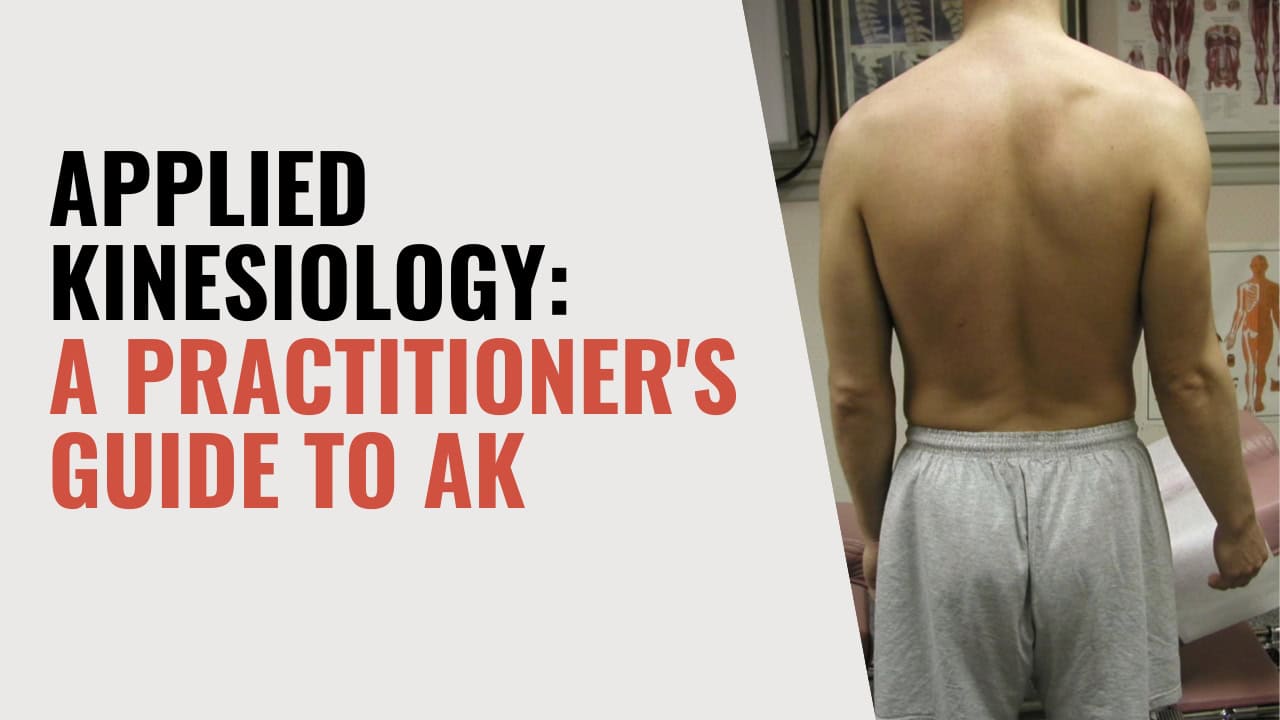
Applied kinesiology is a system of clinical assessment that evaluates structural, chemical, and mental aspects of health using manual muscle testing alongside standard diagnostic methods.
Dr. George Goodheart, a chiropractic physician practicing in Detroit, Michigan, first used muscle testing as a diagnostic tool in 1964, after a single patient encounter that changed how he understood muscle function entirely.
That case raised a question nobody had thought to ask: if a weak muscle could be strengthened by addressing its specific dysfunction, then muscle testing might be a diagnostic tool, not just a measure of disability [Read the full origin story here]
How does applied kinesiology work?
Here’s where most online content gets it wrong.
When people hear “muscle testing,” they picture someone holding out an arm while another person pushes down and declares they’re allergic to wheat.
That’s not applied kinesiology. That’s an untrained person performing a surface-level imitation of one aspect of a sophisticated system of diagnoses and treatment.
In applied kinesiology, manual muscle testing is a tool for functional neurological evaluation. Dr. Walter Schmitt, who spent decades practicing and teaching alongside Goodheart, put it directly:
“Muscle testing equals functional neurology. We’re really looking at it as a tool for neurological and neurochemical evaluation.”
Goodheart said it another way: “Everyone wants to be a therapeutic giant, and they end up being diagnostic midgets.” His point was that AK is first a diagnostic system. The treatment follows what the testing reveals. You don’t get to the right treatment without the right diagnosis.
“AK is a system of diagnosis. It is not a technique.”
When we test a muscle’s response with manual muscle testing, we’re assessing the associated neurological pathway. A muscle that tests “weak” isn’t necessarily physically weak. Its neurological control is compromised.
Correct the cause of the weak muscle, and the neurological control is restored.
Three states of a muscle in AK
Properly tested, a muscle shows one of three states:
- Inhibited: tests weak, meaning its neurological control is disrupted
- Normally facilitated: tests strong and responds appropriately to neurological challenges
- Over-facilitated: tests strong, but doesn’t respond normally to neurological challenges
Each state tells the practitioner something different about the nervous system and points toward a different therapeutic approach.
The triad of health in applied kinesiology
One of Goodheart’s early contributions was the concept of the Triad of Health. As he described it: “We developed the idea that man was a structural, chemical, psychological being.”
These three dimensions interact. A problem in one dimension affects the others.
For instance, chronic inflammation from a food sensitivity can show up as recurring low back pain.
An emotional stressor can disrupt digestive function.
A structural problem can affect mood and energy.
Practitioners use this construct daily to understand why a patient’s problem might keep recurring despite seemingly appropriate treatment.

Applied kinesiology vs. muscle testing
This is the gap most online content misses, and the source of nearly all the controversy.
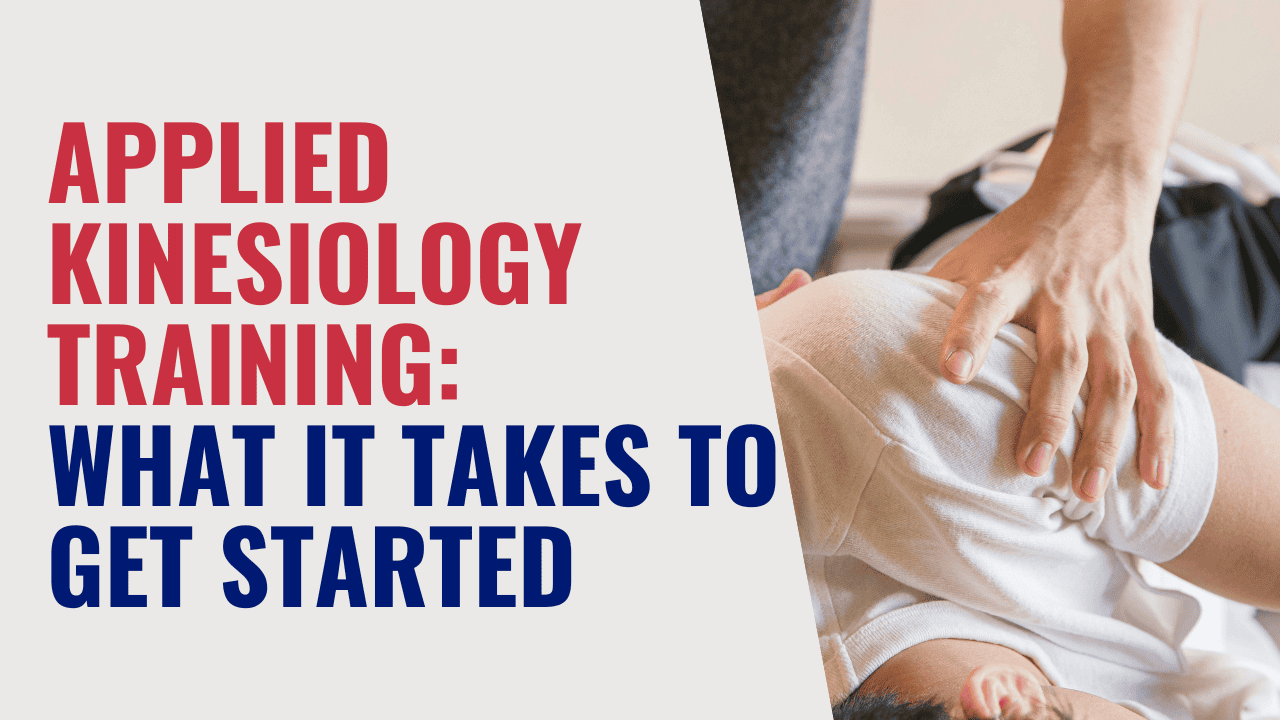
Applied kinesiology as practiced by ICAK-certified professionals requires hundreds of hours of formal training, integration with established diagnostics, and ongoing refinement through continuing education.
The arm pull-down “muscle testing” you might encounter at a health food store involves none of that. No formal education. No integration with standard evaluation.
It’s a crude, untrained, and clinically invalid action with no diagnostic framework or interpretive reliability.
When studies evaluate “Applied Kinesiology” and find inconsistent results, it’s worth checking whether they were actually trained in AK. A peer-reviewed analysis in Chiropractic & Osteopathy found that many studies claiming to evaluate AK actually tested generic muscle testing by untrained individuals, then attributed the results to Applied Kinesiology.
That’s like evaluating cardiac surgery by studying people who watched a YouTube video.
Read the ‘Common errors of muscle testing’ paper here: written by Dr. Wally Schmitt Jr, and Scott C Cuthbert.
Is there scientific evidence for applied kinesiology?
There’s a story that helps explain why Goodheart placed such importance on measurement. Early in his career, he encountered a diagnostic device that used blood samples to evaluate patients.
He became skeptical when the device appeared to produce results even when it was turned off.
To test this, he substituted his own blood sample in place of a patient’s, without informing the operator. The operator, who had what were described as psychic-type abilities, reported findings that matched the patient rather than the actual sample.
Goodheart later said this was the point at which he became a scientist. Not because it confirmed the machine (it didn’t), but because it showed him how easy it was to deceive yourself with data that appeared to be valid.
From that point forward, his approach was clear: “Measure, Measure, Measure. Measure something other than muscle testing. Don’t prove muscle testing with muscle testing.”
Although AK does not have a large library of randomized controlled trials, as Wikipedia and several mainstream medical organizations point out, it does have a body of peer-reviewed research that supports it.
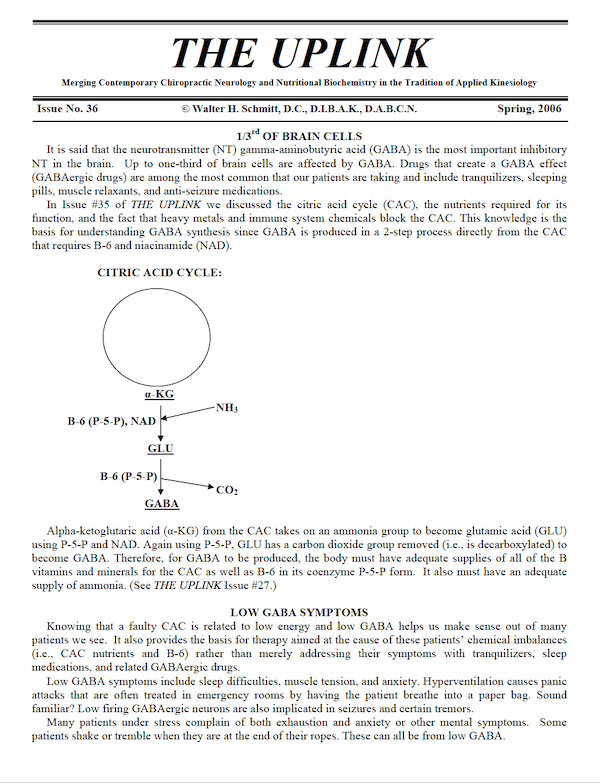
Schmitt and Yanuck published a paper in the International Journal of Neuroscience in 1999 that established the neurological basis for AK procedures as an extension of the standard neurological examination.
Separately, Schmitt and Leisman found a 90.5% correlation between AK muscle testing findings and serum immunoglobulin levels for food sensitivities, suggesting that properly performed muscle testing has a measurable physiological basis.
A 2023 study found AK muscle testing provided accurate results when measuring sacroilliac dysfunction, with accuracy comparable to other diagnostic tests.
Studies that report no validity have almost exclusively evaluated untrained individuals performing simplified, non-clinical versions of muscle testing procedures.
That distinction matters, and it’s the one most online summaries ignore.
Schmitt himself was clear: “You can’t make a diagnosis based on muscle testing alone.”
Although it’s a great help in guiding you on where to look, there must be some other clinical indicator. AK practitioners are trained to back up muscle testing findings with history, examination, lab work, or other clinical findings. The muscle test guides attention. It does not replace clinical judgment.
Is that the same as a 10,000-patient randomized controlled study? No. But it’s a more complete picture than either the dismissals or criticisms suggest.
From applied kinesiology to a structured clinical protocol
Dr. Walter Schmitt spent decades working alongside Goodheart himself. He observed that the sequence in which AK procedures were performed changed the clinical outcomes. The same techniques, applied in a different order, produced different results.
Dr. Kerry McCord, then a teaching assistant of Dr. Schmitt, described the moment it clicked:
“Are you trying to tell me that the order in which we perform these techniques and procedures has a direct impact on the outcomes we see?”
Schmitt’s answer: “Yes!”
McCord asked where it was written down. Schmitt said it was in his head.
McCord’s response: “You’re going to have to put it on paper. Tomorrow is not promised, and if you should die unexpectedly, your life’s work will go with you.”
That conversation led to the development of the Quintessential Applications Course.
A course that teaches physicians what to do first, next, and last with every patient.
The core principle is systems first, before focusing on any local problem.
Over decades of clinical observation, Schmitt found that 70-80% of local problems improve or resolve once systemic imbalances are addressed.
As Goodheart told Schmitt early on: “We have to know what we know, and know what others know, and then be able to put it all together better than anyone else.”
Sadly, Dr. Schmitt passed away in November 2021. Because of the conversation with Dr. McCord, his work has survived and is available as an online curriculum through QA Home Study.
Frequently Asked Questions
Is applied kinesiology the same as muscle testing?
Not exactly. Applied kinesiology uses Manual muscle testing as a diagnostic tool. AK is a complete clinical system for diagnosis and treatment. Calling AK “muscle testing” is like calling surgery “cutting.”
What conditions can applied kinesiology help with?
AK is an assessment framework, not a treatment for specific conditions. Practitioners use it to evaluate structural, chemical, and mental aspects and then apply the appropriate intervention. Documented clinical applications include musculoskeletal pain, food sensitivities, TMJ dysfunction, digestive issues, and chronic conditions that haven’t responded to conventional or other treatment.
Do I need AK experience to learn the QA protocol?
No. The QA Course is built for all practitioners, including those with no AK background.
Is applied kinesiology covered by insurance?
AK performed by a licensed practitioner (chiropractor, osteopath, MD) is typically billed under that practitioner’s standard evaluation and treatment codes. Coverage depends on the license and the insurance plan, not on AK specifically.
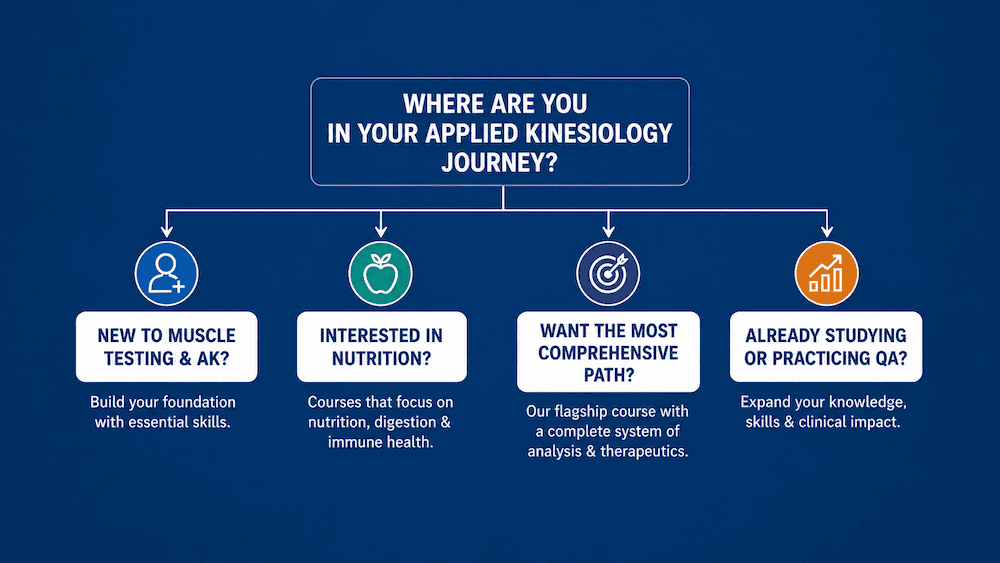
Where to start with Applied Kinesiology
If you’re a practitioner who has plenty of tools but no clear roadmap, or you’re getting decent results but suspect that you could do better, applied kinesiology can help.
It works with whatever you already do. The practitioners who get the most from AK learn it through structured education that respects the depth of the discipline.
- Start with the QA Course — Access Session 1 FREE for 7 days, no credit card required
- Explore Injury Recall Technique — A procedure many practitioners implement from day one
- Browse all Courses — For beginners and advanced practitioners